
Quick answer
“Lawn surfactant” means two different products. A spray surfactant (adjuvant) mixes into weed killer to help it stick to and soak into leaves. Our pick is Southern Ag Non-Ionic Surfactant (80% NIS). A soil wetting agent helps water soak into dry, hydrophobic or compacted soil. Our pick is Turf Titan Hydro Holder, which comes with a hose-end sprayer. Only add a surfactant to a herbicide if its label allows or recommends it.
Water beads up on waxy weed leaves and on dry, crusty soil. A surfactant lowers the surface tension so the liquid spreads out and soaks in. In a weed-killer tank that means better coverage and absorption. On the lawn it means irrigation and rain reach the roots instead of running off.
| 1 | 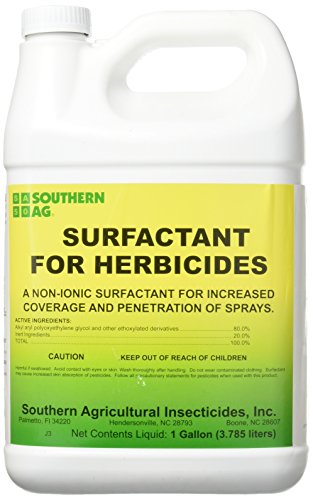 | Southern Ag Non-Ionic Surfactant (Gallon)Best Overall for Weed Killers | Check price |
| 2 | 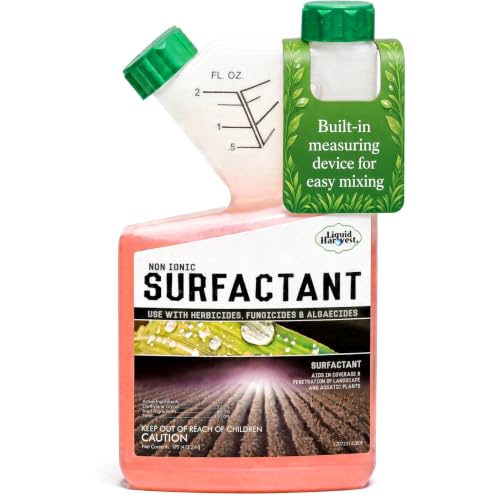 | Liquid Harvest Non-Ionic Surfactant (16 oz)Best Small Bottle | Check price |
| 3 |  | ProSolutions Methylated Seed Oil (MSO)Best for Tough Weeds | Check price |
| 4 |  | Liquid Harvest Lazer Blue Spray IndicatorBest Add-On | Check price |
| 5 |  | Turf Titan Hydro HolderBest Soil Wetting Agent for Lawns | Check price |
| 6 |  | Grow More E-Z Wet 26%Best Budget Soil Penetrant | Check price |
The best lawn surfactants
1Southern Ag Non-Ionic Surfactant (Gallon)Best Overall for Weed Killers
Southern Ag’s non-ionic surfactant (NIS) contains 80% active surfactant and is listed for use with most herbicide sprays, including 2,4-D amine, Trimec-type broadleaf killers and brush killers. The labeled rate is about 1 teaspoon per gallon, so a gallon lasts a homeowner for years.
- Type: non-ionic surfactant (spray adjuvant)
- Concentration: 80% NIS
- Rate: about 1 tsp per gallon (1 pt per 100 gal)
- Size: 1 gallon
Best For: Homeowners who spray broadleaf weed killers regularly.
Pros:
- High concentration, low cost per use
- Works with most herbicides
- Big bottle lasts years
Cons:
- Gallon size is more than occasional users need
- Stock varies
- Only use with herbicides whose label allows it
2Liquid Harvest Non-Ionic Surfactant (16 oz)Best Small Bottle
A 16 oz non-ionic surfactant for occasional sprayers. It does the same job, spreading the spray evenly and helping it absorb, in a size you’ll use up before it goes off.
- Type: non-ionic surfactant
- Size: 16 oz
- Use: herbicide tank mixes
Best For: Occasional spot-spraying.
Pros:
- Small, affordable bottle
- Easy to measure
- Improves coverage on waxy weeds
Cons:
- Higher cost per ounce
- Concentration not as clearly stated as Southern Ag
- Herbicide-only use
3ProSolutions Methylated Seed Oil (MSO)Best for Tough Weeds
MSO is an oil-based adjuvant that penetrates the waxy leaves of tough weeds and grasses better than a plain NIS. Many herbicides for hard-to-kill weeds recommend it on the label. It can increase the risk of injury to desirable turf, so use it only where the herbicide label calls for MSO.
- Type: methylated seed oil adjuvant
- Size: 1 gallon
- Use: herbicides whose label specifies MSO
Best For: Tough, waxy or grassy weeds where the herbicide label calls for MSO.
Pros:
- Better penetration than NIS on hard weeds
- Professional standard
- Good value per gallon
Cons:
- Can raise turf injury risk
- Not for every herbicide
- Oily, so clean the sprayer well
4Liquid Harvest Lazer Blue Spray IndicatorBest Add-On
Not a surfactant, but the most useful tank additive after one. A blue marker dye shows exactly where you’ve sprayed, so you don’t double-dose or miss strips. The color fades in sunlight within days.
- Type: spray pattern indicator dye
- Size: 8 oz concentrate
Best For: Anyone spraying lawns or beds.
Pros:
- Prevents overlaps and misses
- Small dose per tank
- Fades naturally
Cons:
- Can stain concrete and skin if splashed
- Doesn’t improve weed kill
5Turf Titan Hydro HolderBest Soil Wetting Agent for Lawns
For lawns where water runs off or puddles, or where dry patches won’t green up, a soil wetting agent helps water soak evenly into the root zone. Hydro Holder comes with a hose-end sprayer for easy whole-lawn application.
- Type: soil wetting agent
- Size: 32 oz with hose-end sprayer
- Use: dry, compacted or water-repellent lawns
Best For: Lawns with dry spots, runoff or hard, compacted soil.
Pros:
- Ready to spray from a hose
- Helps water reach roots
- Useful in heat and drought
Cons:
- Doesn’t fix compaction on its own; aerate too
- Needs repeat applications
- Results take weeks
6Grow More E-Z Wet 26%Best Budget Soil Penetrant
A biodegradable, non-ionic, pH-neutral soil penetrant that helps soil, mulch and potting mixes absorb water. A quart treats a lot of ground and also works in beds and containers.
- Type: soil penetrant (non-ionic)
- Strength: 26%
- Size: 1 quart
- pH: neutral
Best For: Budget soil wetting for lawns, beds and pots.
Pros:
- Low cost
- Works on soil, mulch and peat
- Biodegradable
Cons:
- You need your own sprayer
- Mixing required
- Less lawn-specific guidance
Which surfactant do you need?
Non-ionic (NIS)
The standard weed-killer additive. Mild and works with most herbicides.
MSO
Stronger penetration for tough weeds. Use only where the herbicide label calls for it.
Soil wetting agent
Helps water infiltrate dry, sandy or water-repellent soil and reduces runoff.
Marker dye
Shows where you’ve sprayed. Pairs well with any of the above.
How to use a spray surfactant
- Check the herbicide label. Many ready-to-use and some concentrated products already contain a surfactant, and adding more can injure the lawn.
- Fill the sprayer partly with water, add the herbicide, then the surfactant at the label rate, then top up.
- Spray on a calm, dry day when no rain is expected for the time stated on the label.
- Clean the sprayer thoroughly afterwards.
Frequently asked questions
Can I use dish soap as a surfactant?
It’s often suggested, but dish soap isn’t designed for herbicides. It varies by brand and can contain ingredients that affect the mix or the lawn. A proper non-ionic surfactant is cheap, measured and predictable.
Does every weed killer need a surfactant?
No. Many lawn weed killers already contain one. Add a surfactant only when the herbicide label recommends or allows it.
How often should I use a soil wetting agent?
Typically every few weeks through the hot, dry season on problem areas, following the product label. Combine it with core aeration for compacted soil.
How we chose: This is a researched guide. We compared surfactant type, concentration, labeled use rates and intended use from product labels and listings, plus standard guidance on herbicide adjuvants and soil wetting agents. We didn’t field-test these products. Always follow the herbicide and surfactant labels.
Update log: November 2026: rebuilt the guide. We separated spray adjuvants from soil wetting agents, added an MSO option, a marker dye, mixing steps, label cautions and an FAQ.