
Quick answer
10W-30 is the right oil for most four-stroke mower engines when temperatures vary, including cooler starts in spring and fall. Our top pick is Toro Full Synthetic 10W-30, made for air-cooled small engines. If your engine maker sells its own oil, it’s a safe choice: Honda GN4 for Honda and Kohler 10W-30 for Kohler. Any quality detergent oil meeting the API service class in your manual will do. Always follow the oil type and capacity in your manual.
Air-cooled mower engines run hot and have no oil filter on most push mowers, so the oil does a lot of work. 10W-30 flows easily on cool mornings and still protects in summer heat. Some engine makers note it may burn slightly more oil above about 80°F than straight SAE 30, which they often recommend for consistently hot weather.
| 1 |  | Toro Full Synthetic 10W-30 4-CycleBest Overall | Check price |
| 2 | 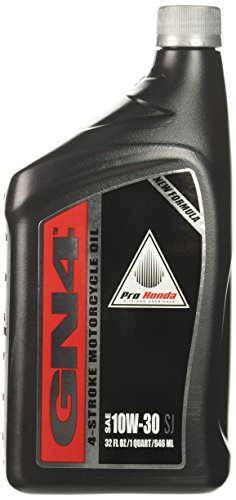 | Pro Honda GN4 10W-30Best for Honda Engines | Check price |
| 3 |  | Kohler 10W-30Best for Kohler Engines | Check price |
| 4 |  | STP Premium Small Engine 10W-30Best Value Small-Engine Oil | Check price |
| 5 |  | Mobil 1 Advanced Full Synthetic 10W-30Best for Riders (Bulk) | Check price |
| 6 |  | DURATECH 500 cc Fluid ExtractorBest Add-On | Check price |
The best 10W-30 oils for lawn mowers
1Toro Full Synthetic 10W-30 4-CycleBest Overall
A full synthetic 10W-30 made for 4-cycle outdoor power equipment. Synthetics resist breakdown from heat better than conventional oil, a real advantage in air-cooled engines. The 32 oz bottle is about one oil change for many walk-behinds.
- Viscosity: 10W-30
- Type: full synthetic
- Size: 32 oz
- Made for: 4-cycle small engines
Best For: Any 4-cycle mower that calls for 10W-30.
Pros:
- Excellent heat resistance
- Sized for mower oil changes
- Works in any brand of engine that specifies 10W-30
Cons:
- Costs more than conventional oil
- Small bottle is pricey for riders
- Check your manual’s oil spec
2Pro Honda GN4 10W-30Best for Honda Engines
Honda’s own 4-stroke oil, formulated for its GCV and GX engines. Using the maker’s oil removes any doubt during the warranty period.
- Viscosity: 10W-30
- Made for: Honda 4-stroke engines
- Size: 1 quart (gallon also available)
Best For: Honda mowers and other Honda equipment.
Pros:
- Engine-maker oil
- Widely available
- Good value by the gallon
Cons:
- Conventional, not full synthetic
- Brand premium over generic oil
3Kohler 10W-30Best for Kohler Engines
Kohler’s branded 10W-30 for Courage, Command and 7000 Series engines in riding mowers and zero-turns. Pair it with the correct Kohler oil filter where your engine has one.
- Viscosity: 10W-30
- Made for: Kohler engines
- Size: 1 quart
Best For: Kohler-powered riders and zero-turns.
Pros:
- Maker-approved oil
- Ideal during warranty
- Simple choice
Cons:
- Stock can be limited
- Riders need several quarts
4STP Premium Small Engine 10W-30Best Value Small-Engine Oil
A synthetic-blend 4-cycle oil made for mowers, generators and other small engines, at a budget price.
- Viscosity: 10W-30
- Type: synthetic blend
- Made for: 4-cycle small engines
Best For: Budget-minded owners who want a small-engine-specific oil.
Pros:
- Low price
- Formulated for small engines
- Easy to find
Cons:
- Not full synthetic
- Smaller bottles cost more per quart
5Mobil 1 Advanced Full Synthetic 10W-30Best for Riders (Bulk)
For riding mowers that take 2 quarts or more, a 5-quart jug of a top automotive synthetic is cost-effective. Engine makers generally accept quality detergent automotive oils that meet the API service class in the manual. Check yours.
- Viscosity: 10W-30
- Type: full synthetic
- Size: 5 quarts
Best For: Riding mowers and owners with several machines.
Pros:
- Excellent protection
- Low cost per quart in bulk
- Available everywhere
Cons:
- Automotive formula, so check your manual’s API spec
- More than a push mower needs
6DURATECH 500 cc Fluid ExtractorBest Add-On
Most push mowers have no drain plug, so oil changes mean tipping the mower. A hand-pump extractor sucks old oil out through the dipstick tube instead. It’s cleaner and safer for the carburetor.
- Capacity: 500 cc
- Use: extract oil through the dipstick tube
- Includes: long hose and extension tubes
Best For: Push mower oil changes.
Pros:
- No tipping the mower
- Less mess
- Cheap
Cons:
- Slow with cold, thick oil, so warm the engine first
- May not reach every drop
10W-30 vs SAE 30 vs 5W-30
SAE 30
Straight weight for warm weather (generally above about 40°F). Many manuals list it for summer mowing.
10W-30
Multi-grade for varying temperatures. Easier cold starts, and may use a little more oil in very hot weather.
Synthetic 5W-30 / 10W-30
Best protection across temperatures and for heavy use. Often allowed for all temperatures.
Rule
Your engine manual’s viscosity chart overrides general advice.
How to change mower oil
- Run the engine for a few minutes so the oil flows easily, then stop it and disconnect the spark plug wire.
- Drain the oil through the drain plug, or extract it through the dipstick tube. If you tip a mower, keep the air filter and carburetor facing up.
- Replace the oil filter if your engine has one.
- Refill gradually with the amount in your manual (often about 15–20 oz for push mowers, more for riders), checking the dipstick as you go.
- Recycle the used oil at an auto parts store or recycling center.
Frequently asked questions
Can I use car oil in my lawn mower?
Usually yes, if it’s a quality detergent oil of the viscosity and API service class your manual lists. Avoid oils with added “friction modifiers” if your manual warns against them.
How often should I change mower oil?
Commonly after the first 5 hours on a new engine, then every 50 hours or once a season. Check your manual, because some engines differ.
Is 10W-30 OK in summer?
Yes, for most engines, though some makers note slightly higher oil use above about 80°F. Check the oil level often in hot weather.
How we chose: This is a researched guide. We compared viscosity, base oil type and small-engine suitability from product listings, plus engine makers’ published oil guidance. We didn’t field-test these oils. Always use the oil type, service class and capacity in your engine manual.
Update log: November 2026: rebuilt the guide. We added engine-maker oils, a small-engine synthetic, a bulk option for riders, an oil extractor, a viscosity comparison, oil change steps and an FAQ.