
Quick answer
A dethatching blade swaps in for your walk-behind mower’s normal blade and uses spring tines to comb out light thatch. It’s a cheap alternative to a dedicated dethatcher. Our top pick is the Oregon universal dethatcher blade, sold in 16″, 18″ and 20″ lengths with adapters for most mowers. Match the blade length to your deck, and use it only for light thatch. For heavy thatch, a real dethatcher works far better.
Instead of cutting, a dethatching blade has steel spring tines that spin just above the soil and drag up dead grass. It works on most rotary walk-behind mowers. It’s great value if you only dethatch occasionally, but it’s harder on the mower than mowing and less thorough than a powered dethatcher.
| 1 | 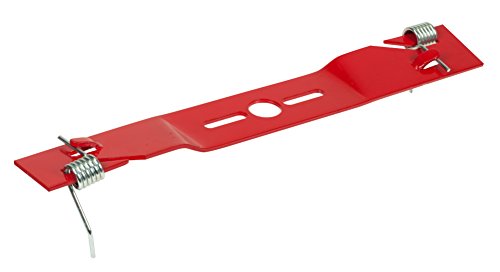 | Oregon 690-618-0 Universal 18″ Dethatcher BladeBest Overall | Check price |
| 2 |  | Oregon 690-521-0 Universal 20″ Dethatcher BladeBest for 21–22″ Decks | Check price |
| 3 |  | Arnold 21″ Dethatching BladeBest Alternative Brand | Check price |
| 4 | | Oregon 690-617-0 Universal 16″Best for Small Mowers | Check price |
| 5 |  | MaxPower 330100B 16″ Power RakeBest Budget | Check price |
| 6 |  | Replacement Dethatcher Springs (4-pack)Best Add-On | Check price |
The best dethatching blades
1Oregon 690-618-0 Universal 18″ Dethatcher BladeBest Overall
Oregon’s universal blade comes with adapters to fit many popular mower spindles and replaceable spring tines. The 18″ size suits many 18–21″ decks. Oregon also makes 16″ and 20″ versions (below).
- Length: 18″
- Type: spring-tine dethatcher blade
- Fit: universal, with adapters
- Use: light thatch and moss
Best For: Most 18–21″ walk-behind mowers.
Pros:
- Well-known brand
- Universal adapters
- Replaceable tines
Cons:
- Check that the center hole and adapters fit your spindle
- Light thatch only
- Tines wear and need replacing
2Oregon 690-521-0 Universal 20″ Dethatcher BladeBest for 21–22″ Decks
The 20″ version suits typical 21″ and 22″ walk-behinds and covers more ground per pass.
- Length: 20″
- Fit: universal, with adapters
Best For: Standard 21–22″ walk-behind mowers.
Pros:
- Covers more ground per pass
- Same proven design
- Replaceable tines
Cons:
- Stock can be limited
- Too long for 18–19″ decks
- Light thatch only
3Arnold 21″ Dethatching BladeBest Alternative Brand
Arnold’s 21″ dethatching blade is sized for common 21″ decks. It’s a solid alternative when the Oregon is out of stock.
- Length: 21″
- Type: spring-tine dethatcher blade
Best For: 21″ walk-behind mowers.
Pros:
- Sized for 21″ decks
- Widely available
- Fair price
Cons:
- Confirm mounting against your mower
- Light thatch only
- Not for riding mowers
4Oregon 690-617-0 Universal 16″Best for Small Mowers
For compact 16–18″ mowers, use the shorter Oregon blade. A blade that’s too long can hit the deck.
- Length: 16″
- Fit: universal, with adapters
Best For: Small walk-behind mowers.
Pros:
- Correct size for small decks
- Universal adapters
- Replaceable tines
Cons:
- Narrow path
- Slow on bigger lawns
- Light thatch only
5MaxPower 330100B 16″ Power RakeBest Budget
MaxPower’s 16″ power-rake blade is made in the USA and costs much less than the Oregon. It’s a no-frills option for small mowers.
- Length: 16″
- Made in: USA
- Type: power rake / dethatcher blade
Best For: Small mowers on a tight budget.
Pros:
- Lowest price
- US-made
- Replacement springs widely available
Cons:
- 16″ only
- Fewer adapters
- Light thatch only
6Replacement Dethatcher Springs (4-pack)Best Add-On
Spring tines wear and occasionally snap. Keep a set of replacements, compatible with MaxPower 330105-style blades and similar, so a broken tine doesn’t end the job.
- Pack: 4 springs
- Fits: MaxPower 330105-style and similar dethatcher blades
Best For: Anyone using a dethatching blade.
Pros:
- Cheap insurance
- Quick to swap
- Keeps the blade balanced
Cons:
- Check compatibility with your blade
- Replace in pairs to keep balance
How to use a dethatching blade safely
- Disconnect the spark plug wire (or remove the battery) before working under the deck.
- Mow the lawn short first with your normal blade.
- Swap in the dethatching blade using the correct adapter, and tighten the bolt to the torque in your mower manual.
- Set the deck height so the tines just touch the soil surface, not dig into it.
- Mow at a slow walking pace, then rake up the thatch.
- Refit your normal cutting blade before your next mow.
- Wear eye protection. Tines can break and throw debris.
- Don’t use it on riding mowers or zero-turns unless the blade maker lists your model.
- Inspect the tines before each use and replace any that are worn or bent.
Dethatching blade vs. dethatcher
Dethatching blade
Cheap and uses the mower you already own. Good for light thatch (under about ½″) once a year.
Electric dethatcher
Deeper, more even results, depth settings and a scarifier option. Best for real thatch problems.
See our best lawn dethatchers guide if your thatch is thicker than about half an inch.
Frequently asked questions
Do dethatching blades work?
Yes, for light thatch and moss. They comb rather than slice, so heavy, matted thatch needs a dedicated dethatcher or scarifier.
Will a dethatching blade damage my mower?
Used correctly, no. But it loads the engine and spindle differently from a cutting blade. Keep the tines just touching the soil, check the balance, and don’t use it on stony ground.
What size dethatching blade do I need?
Match it to your normal blade length. For many 21″ mowers that means a 20″ or 21″ dethatching blade. Check the center hole and adapter fit too.
How we chose: This is a researched guide. We compared blade lengths, mounting adapters and tine design from manufacturer listings, plus standard guidance on light dethatching with rotary mowers. We didn’t field-test these blades. Confirm fit with your mower’s manual.
Update log: November 2026: rebuilt the guide. We focused the picks on actual dethatching blades by size, added replacement springs, safe-use steps, a blade vs dethatcher comparison and an FAQ.