
Quick answer
A lawn (sod) plugger cuts a neat hole in your lawn and lifts out a core, so you can plant grass plugs (zoysia, St. Augustine, Bermuda, centipede) or patch bare spots without bending. Our top pick is the Yard Butler Sod Plugger, which cuts standard 3×3″ plugs, has a foot pedal and an ejector button, and is listed for every major turf type. The Colwelt Square Plugger is the value pick, and the ProPlugger 5-in-1 is best for small plugs and bulbs.
Warm-season grasses like zoysia and St. Augustine are often sold as 3″ or 4″ plugs, or as sod you cut into plugs yourself. A plugger makes a hole that exactly matches the plug, so it sits level and roots quickly. Most of the work comes from repetition: a 1,000 sq ft area at 12″ spacing needs about 1,000 plugs. That’s why foot pedals, ejectors and long handles matter.
| 1 |  | Yard Butler Sod PluggerBest Overall | Check price |
| 2 | 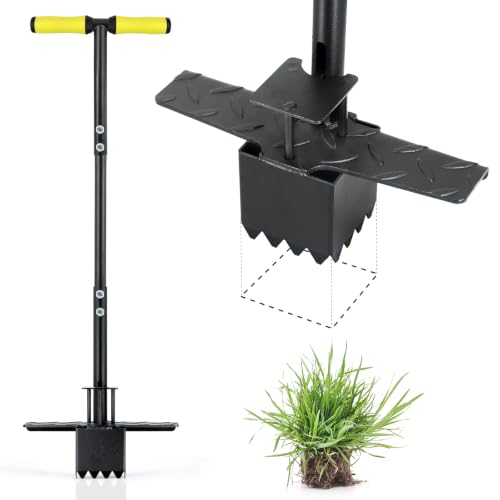 | Colwelt Square Sod PluggerBest Value | Check price |
| 3 |  | Dolibest Sod PluggerBest for Hard Soil | Check price |
| 4 | 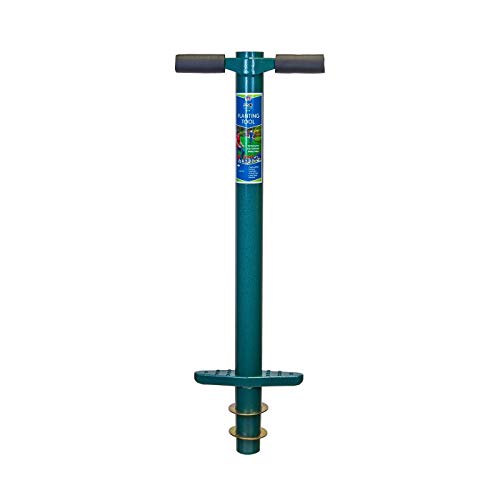 | ProPlugger 5-in-1Best for Small Plugs and Bulbs | Check price |
| 5 |  | BARAYSTUS Long-Handle PluggerBest for Tall Users | Check price |
The best lawn pluggers
1Yard Butler Sod PluggerBest Overall
It cuts 3×3″ plugs to match common commercial sizes. It has a long T-grip handle, a foot pedal for leverage and an ejector button that pops the core out. It’s made of rust-resistant coated steel by Lewis Lifetime Tools and listed for zoysia, St. Augustine, fescue, centipede and Bermuda.
- Plug size: 3 × 3″
- Ejection: push-button ejector
- Build: coated steel
- Turf: zoysia, St. Augustine, Bermuda, centipede, fescue
Best For: Planting or repairing warm-season lawns with plugs.
Pros:
- Standard plug size
- No-bend design
- Quick ejection
Cons:
- Pricier than generic tools
2Colwelt Square Sod PluggerBest Value
A 36″ carbon-steel plugger that cuts square 3×3″ plugs. Square plugs fit together more tightly than round ones. It has two anti-slip foot pedals and a foot-operated ejector, so your hands stay clean.
- Plug size: 3 × 3″ square
- Height: 36″
- Pedals: 2, with foot ejector
Best For: Big plugging jobs on a budget.
Pros:
- Square plugs
- Dual pedals
- Foot ejector
Cons:
- Shorter handle for tall users
3Dolibest Sod PluggerBest for Hard Soil
A powder-coated steel plugger with serrated cutting edges for clay and compacted soil, two foot pedals, a large central foot ejector and a soft grip.
- Edge: serrated
- Pedals: dual, plus foot ejector
- Finish: black powder coat
Best For: Clay and hard-packed lawns.
Pros:
- Serrated edge bites in
- Comfortable grip
- Easy ejection
Cons:
- Round plugs
4ProPlugger 5-in-1Best for Small Plugs and Bulbs
A USA-made, welded carbon-steel tool that cuts 2⅛″ holes from a standing position. It also works as a bulb planter, weeder and soil sampler. The maker doesn’t recommend it for St. Augustine plugs.
- Hole size: 2⅛″ diameter
- Uses: plugs, bulbs, annuals, weeding, soil tests
- Build: welded carbon steel, made in USA
Best For: Zoysia or Bermuda plugs and garden planting.
Pros:
- Very versatile
- Durable
- Made in USA
Cons:
- Small hole
- Not for St. Augustine
5BARAYSTUS Long-Handle PluggerBest for Tall Users
A 40″ long-handle plugger and bulb planter with a serrated base, double pedals and a soft T-grip. The carbon steel has an anti-rust coating.
- Handle: 40″
- Edge: serrated
- Pedals: double
Best For: Tall users and long planting sessions.
Pros:
- Longest handle
- Easy step-and-twist
- Low price
Cons:
- No ejector
How to plant grass plugs
Step 1: Prepare the area
Mow low, kill or remove weeds, and water the soil the day before so the plugger cuts cleanly.
Step 2: Mark the spacing
Use 6–12″ spacing in a grid or diamond pattern. Closer spacing fills in faster but needs more plugs.
Step 3: Pull cores and set the plugs
Step the plugger in, twist and lift, then eject the core. Drop in a plug so it’s level with the surrounding soil, and press it firmly.
Step 4: Water and feed
Water daily for the first 1–2 weeks, then taper off. A starter fertilizer helps the plugs root and spread.
Frequently asked questions
What size plugger do I need?
Match it to your plugs. Most bought plugs are 2–4″, and 3″ square pluggers fit standard commercial plugs.
How long do plugs take to fill in?
It depends on the grass and spacing. Bermuda and St. Augustine spread quickly, while zoysia is slower and can take one to two seasons at 12″ spacing.
Is a plugger the same as an aerator?
No. A plugger cuts one large hole for planting. A core aerator, such as the Yard Butler coring aerator, pulls many small cores to relieve compaction.
Related: Lawn leveling tools · Best lawn rakes · Lawn dethatchers
How we chose: This is a researched guide. We compared plug size and shape, ejection, pedals, handle length and build from current product listings. We didn’t field-test these tools.
Update log: November 2026: rebuilt the guide. We narrowed the list to five pluggers by plug size and soil type, added planting steps and an FAQ.