
Quick answer
Most Craftsman riding mowers and lawn tractors take a 12-volt Group U1 battery, usually with the positive terminal on the left (U1L layout). Our top pick is the Marxon U1 330 CCA AGM: sealed, maintenance-free, and the right size and layout for most Craftsman tractors. If you start the mower in cold weather, go up to 350–360 CCA. Always check your old battery’s size and terminal positions before ordering.
A Craftsman mower that clicks but won’t crank almost always needs a new battery, or at least a full charge. The good news is that nearly all Craftsman riders use the same small Group U1 battery, so the choice is mostly about cranking power, battery type and getting the terminals on the right side.
| 1 |  | Marxon U1 330 CCA AGMBest Overall | Check price |
| 2 |  | UPLUS U1 360 CCA AGMBest for Cold Starts | Check price |
| 3 | 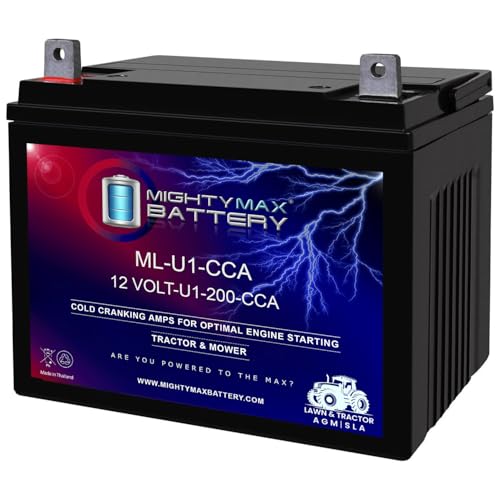 | Mighty Max ML-U1 200 CCABest Budget | Check price |
| 4 |  | Energizer U1 350 CCABest Name-Brand Option | Check price |
| 5 |  | TYKOOL U1 400 CCA Lithium (LiFePO4)Best Lightweight Upgrade | Check price |
| 6 | 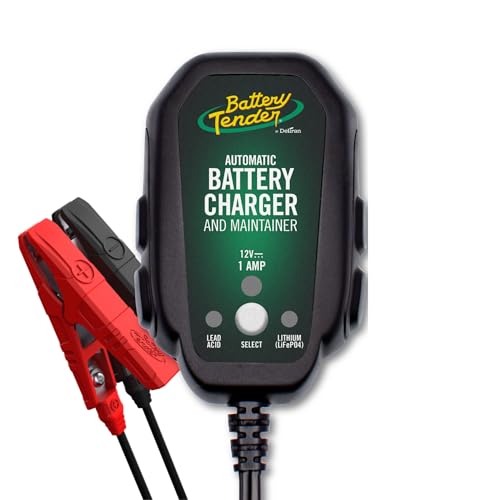 | Battery Tender Junior 800 mABest Add-On (Maintainer) | Check price |
The best Craftsman riding mower batteries
1Marxon U1 330 CCA AGMBest Overall
Marxon’s 330 CCA U1 has the classic Craftsman layout, with positive on the left and negative on the right. It measures about 7.7 × 4.9 × 6.1 inches, so it drops into the standard tray. As a sealed AGM battery it never needs watering and won’t spill if the mower tips on a slope.
- Group: U1, 12 V
- Cranking: 330 CCA
- Type: sealed AGM
- Size: 7.68″ × 4.92″ × 6.14″
- Terminals: positive left, negative right
Best For: Most Craftsman lawn tractors and riders.
Pros:
- Right layout for most Craftsman models
- Maintenance-free and spill-proof
- Solid cranking power for the price
Cons:
- Hardware only; reuse your hold-down and cables
- Confirm height if your tray has a low lid
- Not the best for very cold starts
2UPLUS U1 360 CCA AGMBest for Cold Starts
If you mow early in spring, use the tractor for snow, or have a larger V-twin engine, the extra cranking amps help. UPLUS lists 360 CCA and 26Ah capacity. It’s slightly taller than the Marxon at about 6.9″, so measure your battery box first.
- Group: U1, 12 V, 26Ah
- Cranking: 360 CCA
- Type: sealed AGM
- Size: 7.68″ × 4.92″ × 6.93″
Best For: Cold-weather starts and bigger engines.
Pros:
- Highest CCA of the lead-acid picks
- Maintenance-free
- Listed for Craftsman, John Deere, Cub Cadet and others
Cons:
- Taller case may not fit every tray
- Slightly pricier
- Check terminal layout against your old battery
3Mighty Max ML-U1 200 CCABest Budget
Mighty Max lists this U1 specifically for the Craftsman 25780 and similar tractors. At 200 CCA it has less starting power than the others, which is fine for smaller single-cylinder engines in mild weather. It has the same positive-left layout and a one-year warranty.
- Group: U1, 12 V
- Cranking: 200 CCA
- Type: sealed AGM
- Size: 7.62″ × 5.00″ × 7.00″
- Warranty: 1 year
Best For: Smaller engines and warm climates on a budget.
Pros:
- Lowest price
- Mounts in any position
- Listed for specific Craftsman models
Cons:
- Low CCA for cold mornings
- Tallest case here at 7″
- Shorter warranty than some
4Energizer U1 350 CCABest Name-Brand Option
Energizer’s sealed U1 offers 350 CCA with a deep-cycle design, so it copes better than a basic starter battery with repeated drain, such as when lights are left on or the mower sits between uses. It can be mounted in any position.
- Group: U1, 12 V
- Cranking: 350 CCA
- Type: sealed, maintenance-free (gel)
- Strength: deep-cycle durability
Best For: Owners who want a recognizable brand and better recovery from deep discharge.
Pros:
- Strong CCA
- Handles repeated discharge well
- Shock and vibration resistant
Cons:
- Costs more than generic AGMs
- Confirm terminal layout before ordering
- Dimensions not listed in detail
5TYKOOL U1 400 CCA Lithium (LiFePO4)Best Lightweight Upgrade
A lithium U1 weighs about 4 lb instead of roughly 20, and holds its charge for months in storage. TYKOOL lists 400 CCA and compatibility with the Craftsman 25780 and ZT7000. Lithium batteries can be fussy about very cold starts and about chargers, so pair one with a lithium-mode maintainer.
- Group: U1 size, 12.8 V, 8Ah
- Cranking: 400 CCA
- Type: LiFePO4 lithium
- Weight: about 4 lb
- Size: 7.6″ × 4.8″ × 6.9″
Best For: Owners who store the mower for months or want the lightest option.
Pros:
- Very light
- Low self-discharge in storage
- High cranking amps
Cons:
- Costs more than AGM
- Needs a lithium-compatible charger
- Small capacity (8Ah) runs down faster if lights are left on
6Battery Tender Junior 800 mABest Add-On (Maintainer)
Most mower batteries die from sitting, not from age. A smart maintainer keeps the battery topped up over winter without overcharging it. This Battery Tender Junior switches between lead-acid (AGM, flooded, gel) and lithium (LiFePO4) modes, so it works with every battery on this list.
- Output: 12 V, 800 mA
- Modes: lead-acid (AGM/flooded/gel) and lithium
- Use: long-term maintenance, slow charging
Best For: Every mower that sits for more than a few weeks.
Pros:
- Prevents winter battery death
- Lead-acid and lithium modes
- Set-and-forget
Cons:
- Slow at charging a flat battery
- Needs an outlet near storage
- Not a jump starter
How to choose a Craftsman mower battery
Group size
Most Craftsman riders use Group U1 (about 7.7″ × 5″ × 6–7″). Older or compact models may use a smaller 12 V battery, so measure yours.
Terminal layout
Craftsman usually needs positive on the left (facing the terminals). The wrong layout means cables won’t reach.
CCA
230–300 CCA is plenty for most engines in mild weather. Pick 330 CCA or more for V-twins and cold mornings.
AGM vs flooded vs lithium
AGM is sealed and maintenance-free, the best default. Lithium is lightest and stores best but costs more.
How to replace the battery
- Turn off the mower, remove the key and set the parking brake.
- Find the battery. On most Craftsman tractors it’s under the seat or under the hood, depending on the model.
- Disconnect the negative (black) cable first, then the positive (red).
- Remove the hold-down, lift out the old battery and clean any corrosion off the cable ends.
- Fit the new battery the same way round. Connect positive first, then negative, and refit the hold-down.
- Recycle the old battery. Most auto parts stores take them back.
Is it really the battery?
- Check the voltage with a multimeter. A healthy, charged 12 V battery reads about 12.6 V. Below about 12.2 V it needs charging. If it won’t hold a charge, replace it.
- If the battery is good but the mower only clicks, check the cables, the starter solenoid and the safety switches (seat, brake, PTO).
- A battery that keeps dying in season may mean a charging problem with the stator or regulator, not a bad battery.
Frequently asked questions
What size battery does a Craftsman riding mower use?
Most Craftsman lawn tractors and riders use a 12-volt Group U1 battery with the positive terminal on the left. Confirm with your owner’s manual or the label on your old battery, especially on older or compact models.
How long does a Craftsman mower battery last?
Typically 3–5 years. Storing the mower with a maintainer over winter is the biggest single thing you can do to make it last longer.
Can I use a car battery in my riding mower?
No. A car battery is far larger and won’t fit the tray or hold-down. Its terminals and weight also aren’t designed for the mower. Stick with a Group U1 or the size in your manual.
Will a lithium battery work with my Craftsman’s charging system?
Usually, yes. Many mower charging systems work with LiFePO4 batteries, but check the battery maker’s compatibility list and use a lithium-mode charger for storage.
How we chose: This is a researched guide. We compared group size, cold cranking amps, dimensions, terminal layout, battery type and warranty from manufacturer listings, plus standard battery replacement and testing practice. We didn’t field-test these batteries. Prices and availability change, so check the current listing and confirm fit against your old battery.
Update log: November 2026: rebuilt the guide. We added verified sizes and terminal layouts, cold-start and lithium options, a maintainer, replacement and testing steps, and an FAQ.