
Quick answer
For hilly yards, a lawn tractor with a hydrostatic transmission and a differential lock is safer and grips better than a zero-turn. Our top pick is the Husqvarna TS 375XD (24 HP Kawasaki V-twin, 54″ deck, diff lock). For a quieter, low-maintenance option, the EGO TR4204 electric tractor is the pick. Whatever you buy, check the slope limit in the manual. Most riding mowers are rated for about 15°.
Hills are where riding mowers go wrong: wheels spin, light transmissions overheat, and a mower that turns across a slope can tip. The right machine has the traction to climb, a transmission built to hold it on the way down, and a low, wide stance. This guide covers the mowers that fit that description and the safety rules that matter just as much.
| 1 |  | Husqvarna TS 375XDBest Overall for Hills | Check price |
| 2 | 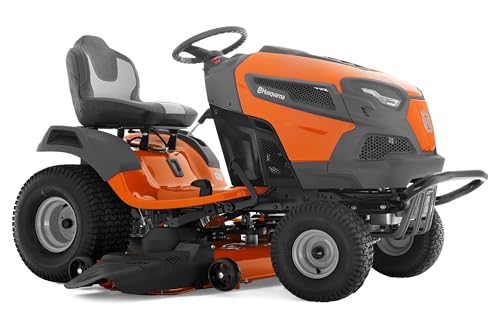 | Husqvarna TS 154XBest Value Gas Tractor | Check price |
| 3 |  | Husqvarna TS 140XBest for Mid-Size Hilly Yards | Check price |
| 4 |  | EGO Power+ TR4204Best Electric Lawn Tractor | Check price |
| 5 | 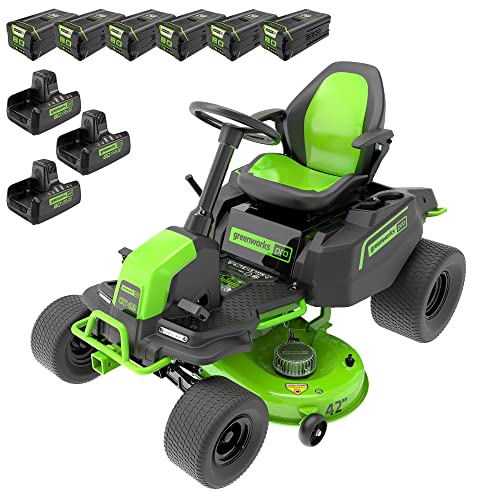 | Greenworks PRO 80V 42″ Lawn TractorBest Electric for Bigger Lots | Check price |
| 6 |  | EGO Power+ Z6 (42″)Best Zero-Turn for Gentle Slopes | Check price |
The best riding lawn mowers for hills
1Husqvarna TS 375XDBest Overall for Hills
The TS 375XD is the hill-climber in Husqvarna’s tractor range. A 24 HP Kawasaki FR-series V-twin gives it torque in reserve, and the differential lock makes both rear wheels pull together when one starts to slip. That’s the feature that matters most on wet or steep grass. The 54″ fabricated deck is thicker steel than the stamped decks on cheaper tractors.
- Engine: 24 HP Kawasaki FR V-twin (726 cc)
- Deck: 54″ fabricated, 3 blades
- Traction: differential lock
- Transmission: hydrostatic
- Type: gas lawn tractor
Best For: Large, hilly properties of 1–3 acres with real slopes.
Pros:
- Diff lock stops one-wheel spin on climbs
- Kawasaki V-twin with power to spare
- Heavy fabricated deck lasts longer
Cons:
- Premium price
- Heavy, so it can rut soft ground
- Stock is often limited online, so check your local dealer
2Husqvarna TS 154XBest Value Gas Tractor
The TS 154X gives you a 24 HP Briggs & Stratton engine and a wide 54″ deck for much less than the XD models. The trade-off is the Tuff Torq K46 hydrostatic transmission, which is a light-duty unit. It handles moderate slopes fine, but repeated steep climbs make it run hot. Use it for rolling lawns rather than steep banks.
- Engine: 24 HP Briggs & Stratton PXi
- Deck: 54″ stamped, 3 blades
- Transmission: Tuff Torq K46 hydrostatic
- Speed: 5 mph forward / 2 mph reverse
- Fuel tank: 3 gallons
Best For: Rolling yards with gentle to moderate slopes on a budget.
Pros:
- Lots of deck and engine for the money
- Easy pedal-controlled hydrostatic drive
- Parts are widely available
Cons:
- K46 transmission is light-duty for steep hills
- No differential lock
- Stamped deck is thinner than fabricated
3Husqvarna TS 140XBest for Mid-Size Hilly Yards
With a 48″ deck, the TS 140X is shorter and lighter than the 54″ tractors, which makes it easier to steer around trees and beds on sloped ground. It keeps a 24 HP Briggs V-twin, so it doesn’t run short of power on climbs, and pedal-operated hydrostatic drive keeps both hands on the wheel.
- Engine: 24 HP Briggs & Stratton V-twin (724 cc)
- Deck: 48″ stamped, 3 blades
- Transmission: pedal-operated hydrostatic
- Type: gas lawn tractor
Best For: Yards of about 1 acre with slopes and obstacles.
Pros:
- V-twin power in a more manageable size
- Hands-on-the-wheel pedal control
- Narrower deck fits through gates
Cons:
- No differential lock
- Slower on open, flat areas than a 54″ deck
- Limited online stock
4EGO Power+ TR4204Best Electric Lawn Tractor
Electric motors deliver full torque from a standstill, which helps on climbs. There’s also no oil to starve when the engine tilts on a slope. EGO’s tractor runs on six 56V batteries (rated as equivalent to a 21 HP gas engine), cuts up to 1.5 acres per charge, and has cruise control, LED lights and no belts on the deck.
- Power: 6 × EGO 56V ARC batteries (included)
- Runtime: up to 1.5 acres per charge
- Deck: 42″ stamped steel, dual brushless motors
- Cutting height: 1.5″–4.5″, 12 positions
- Warranty: 5-year tool warranty
Best For: Quiet, low-maintenance mowing on yards up to about 1.5 acres.
Pros:
- No oil, belts or tune-ups
- Instant torque on climbs
- Batteries also run other EGO tools
Cons:
- High upfront price
- Hills drain the batteries faster than the rated runtime
- 42″ deck is slower on big lawns
5Greenworks PRO 80V 42″ Lawn TractorBest Electric for Bigger Lots
Greenworks rates its 80V tractor for up to 2 acres on six 5.0Ah batteries, more than the EGO. It adds a cargo bed for up to 200 lb and app-based GPS tracking. The 12-gauge reinforced deck is sturdier than most electric mowers.
- Power: 6 × 80V 5.0Ah batteries (included)
- Runtime: up to 2 acres (manufacturer)
- Deck: 42″ reinforced 12-gauge steel
- Extras: cargo bed (200 lb), LED lights, app with GPS
Best For: Electric buyers with 1.5–2 acres of rolling ground.
Pros:
- Longest rated runtime here
- Integrated cargo bed
- Batteries fit 75+ Greenworks 80V tools
Cons:
- Expensive
- Limited online availability
- Charging six batteries takes planning
6EGO Power+ Z6 (42″)Best Zero-Turn for Gentle Slopes
Zero-turns steer with the rear wheels, so they can lose steering and braking when the drive wheels slip on a slope. If you still want one, EGO’s Z6 has a wide frame for balance on slopes and a selectable “Control” drive mode. Keep it to gentle grades and stay well away from drop-offs and water.
- Power: 6 × EGO 56V batteries, rated equivalent to 24 HP gas
- Runtime: up to 1.5 acres
- Deck: 42″, dual blades, 2,300–3,200 RPM
- Speed: up to 8 mph, 3 drive modes
- Warranty: 5 years or 300 hours
Best For: Mostly flat yards with a few gentle banks.
Pros:
- Wide, stable frame
- Control mode for slower, smoother steering
- Quiet and low-maintenance
Cons:
- Zero-turns are less safe on slopes than tractors
- Expensive
- Not for steep banks
How to choose a riding mower for hills
Tractor vs zero-turn
Lawn tractors steer with the front wheels and keep steering when the rear wheels slip. On slopes they’re the safer choice.
Differential lock
Locks both rear wheels together so one can’t spin. It’s the single most useful hill feature.
Transmission
Hydrostatic drives hold the mower when you stop on a slope. Heavier-duty units run cooler on long climbs.
Tires & weight
Turf tires with deeper tread, wheel weights or a rear weight kit add grip. Keep tire pressure as the manual specifies.
How steep is too steep?
Most riding mower manuals limit slopes to about 15° (roughly a 27% grade). Some manuals set a lower limit, so check yours. To measure, lay a straight 2×4 on the slope and use a phone level app on top of it.
- Under 10°: any riding mower, with normal care.
- 10°–15°: lawn tractor with hydrostatic drive, ideally a differential lock. Mow slowly.
- Over 15°: don’t use a riding mower. Use a self-propelled walk-behind, a string trimmer or a slope mower, or replant with ground cover.
Hill safety rules
- On a riding mower, mow up and down slopes, not across. (Walk-behinds are the opposite: mow across.)
- Never mow wet slopes. Wet grass is where most loss-of-traction accidents happen.
- Avoid sudden starts, stops and turns on a slope. Slow down before you reach it.
- Stay well away from ditches, drop-offs, retaining walls and water edges.
- Keep a bagger or cargo load light on hills. Rear weight changes how the mower balances.
- If the mower has a rollover protection bar (ROPS), keep it up and wear the seatbelt.
Frequently asked questions
Is a zero-turn or a lawn tractor better for hills?
A lawn tractor. It steers with the front wheels, so it keeps control if the rear wheels slip, while a zero-turn steers and brakes with its drive wheels. Zero-turns are fine on gentle grades but are the riskier choice on real slopes.
Do electric riding mowers handle hills?
Yes. Electric motors give instant torque, and there’s no engine oil to starve on a tilt. Climbing does drain the batteries faster, so expect less than the rated acreage on hilly ground.
What horsepower do I need for hills?
For a gas tractor with a 42–54″ deck on rolling ground, a 20–24 HP V-twin is plenty. Traction (a diff lock and good tires) and a sturdy transmission matter more than extra horsepower.
Can I add traction to my current mower?
Often, yes. Wheel weights, a rear weight kit, tire chains for off-season use, and turf tires with deeper tread all help. Check that they’re approved for your model and stay within the slope limit in the manual.
How we chose: This is a researched guide. We compared manufacturer specs (engine, transmission, traction aids, deck construction and runtime), current Amazon listings, and the slope limits and safety guidance in riding-mower owner’s manuals. We didn’t field-test these mowers. Prices and stock change often, so check the current listing or your local dealer.
Update log: November 2026: rebuilt the guide. We shifted the picks toward lawn tractors with hill-friendly transmissions and differential locks, flagged zero-turn limits on slopes, and added slope limits, safety rules and an FAQ.